
· Fair Oaks, CA – Zone 1 · American River Bluff
Treat Termites in Fair Oaks, CA – Act Before They Spread Further.
Fair Oaks occupies a unique position above the American River Bluff where rising moisture from the river canyon below meets some of Sacramento County’s oldest unincorporated housing stock, a dense oak woodland canopy, and soils that transition from river-clay to decomposed granite within a single neighborhood. Our licensed technicians have served Fair Oaks since 2010 with free same-day inspections and a written warranty on every treatment.
Open Today
15+
Years of Treating Termites
4.9★
Google Rating
24/7
Emergency Service
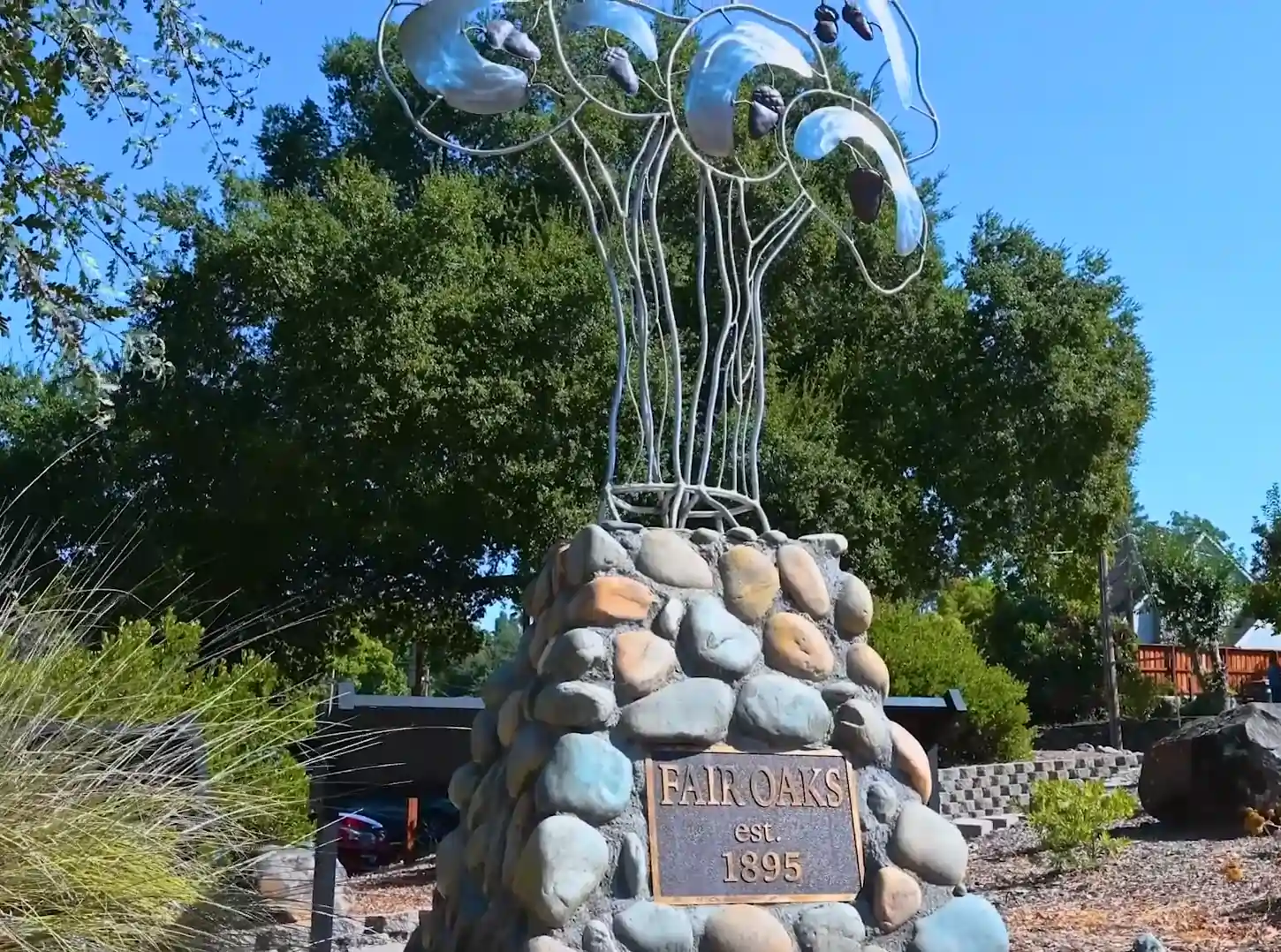
Licensed Termite Control in Fair Oaks Covering the River Bluff, Village Historic District, and Woodland Neighborhoods
Fair Oaks presents a termite environment shaped by three distinct forces operating across different parts of the community simultaneously. The American River Bluff along the community’s southern edge generates upward moisture migration from the canyon below, creating elevated subterranean termite pressure on bluff-top properties whose foundations sit above, not beside, a major water feature. Fair Oaks Village contains some of Sacramento County’s oldest residential and commercial structures, built from the 1920s through the 1950s with no soil barriers and decades of unmonitored structural vulnerability. The broader oak woodland character of Fair Oaks’ residential neighborhoods sustains drywood termite populations in canopy wood that disperses swarmers across the community each summer.
Every Fair Oaks engagement begins with a professional termite inspection that accounts for the specific terrain, soil type, and structure age relevant to each property’s position within the community. Subterranean termites in Fair Oaks clay soils and bluff-edge moisture zones are addressed through liquid barrier applications with depth and application points determined by slope orientation and proximity to the river canyon. Drywood termites colonizing Fair Oaks’ older homes through aging roof assemblies, deteriorated window frames, and canopy contact points are resolved through no-tent spot treatment for isolated colonies or whole-structure fumigation when infestation has advanced across multiple structural zones.
For Formosan subterranean termite cases in Fair Oaks’ river-adjacent soils, multi-method treatment combining liquid barriers and bait stations with extended monitoring is applied immediately. Homeowners in Fair Oaks Village and older woodland neighborhoods with no prior treatment history benefit most from annual termite bonds providing ongoing inspection and barrier maintenance. New construction and additions throughout Fair Oaks receive pre-construction soil and framing treatment with full HUD-NPMA documentation. Where termite damage has compromised structural or cosmetic elements in Fair Oaks’ older homes, we coordinate licensed contractor repairs with Sacramento County building permits handled for all structural work.
Why Fair Oaks Properties Face Termite Pressure?
Fair Oaks’ bluff terrain, historic village core, and woodland soil composition create termite conditions that are genuinely different from neighboring Carmichael, Citrus Heights, and Orangevale. These four problem patterns define what our technicians find most consistently across Fair Oaks properties.
American River Bluff Creates Upward Moisture Migration Unique to Fair Oaks
WHY IT HAPPENS HERE
Properties along Fair Oaks Boulevard, upper Sunset Avenue, and the bluff-edge residential streets sit above the American River canyon. Unlike river-adjacent flat-terrain homes where lateral moisture migration is the primary driver, bluff-top properties experience moisture rising from the canyon below through capillary action in clay and fractured granite soils. This creates a persistent moisture condition at the foundation that seasonal rainfall alone does not explain.
OUR APPROACH
Bluff-edge Fair Oaks properties require a moisture assessment that accounts for both lateral and vertical moisture migration patterns before barrier application. We measure soil moisture at multiple depths along the bluff face and adjust barrier placement to address the upward moisture pathway rather than the standard perimeter-only approach.
Fair Oaks Village Historic Structures Carry the Highest Structural Vulnerability
WHY IT HAPPENS HERE
The Fair Oaks Village area contains residential and commercial buildings constructed from the 1920s through the 1950s. These structures predate all modern termite protection standards by decades. Many sit on shallow foundations with direct wood-to-soil contact, use original old-growth lumber that is now fully seasoned and highly susceptible to feeding, and have not received professional termite treatment in their entire service life.
OUR APPROACH
Village-area properties require a comprehensive structural assessment before treatment. We use non-destructive acoustic emission and probe testing to evaluate existing damage alongside active infestation. Treatment plans cover both elimination and a full perimeter barrier installation from scratch, not a chemical refresh.
Oak Woodland Soils Hold Moisture Differently Than Valley Clay
Fair Oaks’ woodland character produces a surface soil layer enriched with decomposed organic material from decades of oak leaf fall. This organic layer retains moisture significantly longer than the clay and granite soils beneath it, creating near-surface soil conditions that sustain subterranean termite foraging activity in zones that would otherwise dry out during summer. Foundation perimeters surrounded by established oak canopy and organic leaf accumulation stay moist when the broader neighborhood soil is dry.
OUR APPROACH
Foundation perimeter moisture mapping in Fair Oaks woodland properties identifies organic soil moisture zones that require barrier application adjusted for surface layer composition. Clearing accumulated leaf material from the foundation perimeter is included in every Fair Oaks treatment recommendation alongside the chemical application.
Lake Natoma Proximity Elevates Termite Pressure in Eastern Fair Oaks
WHY IT HAPPENS HERE
Lake Natoma occupies the American River channel east of Nimbus Dam along Fair Oaks’ eastern boundary. Properties in eastern Fair Oaks near the Hazel Avenue corridor and Lake Natoma shores experience year-round elevated soil moisture from the lake’s influence on the surrounding water table, sustaining subterranean termite colony activity in adjacent soils regardless of seasonal conditions.
OUR APPROACH
Eastern Fair Oaks properties near Lake Natoma are assessed with the same elevated-risk protocol used for American River-adjacent properties. Year-round water table influence means annual inspection and active barrier maintenance are non-optional for properties within several blocks of the lake shoreline.
Fair Oaks Termite Activity Across Every Season
Fair Oaks’ bluff terrain, woodland soil composition, and dual water body influence create termite pressure patterns that combine river moisture, canopy habitat, and organic soil conditions across all four seasons.
Spring (March – May)
American River snowmelt raises the canyon water level from March through May, increasing upward moisture migration through bluff-edge soils and triggering subterranean swarming activity along Fair Oaks’ southern bluff residential corridor. Drywood swarmers from oak canopy-established colonies begin dispersing as afternoon temperatures reach the swarming threshold through April and May.
TIP: Bluff-edge Fair Oaks homeowners along Sunset Avenue and upper Fair Oaks Boulevard corridors should schedule spring inspections before April 15. Upward moisture migration from the river canyon activates bluff-side subterranean colonies earlier in spring than inland Fair Oaks neighborhoods, and dual-species swarming from both soil and canopy begins simultaneously as temperatures rise.
Summer (June – September)
Fair Oaks’ woodland oak canopy produces peak drywood swarmer dispersal from late July through September as established canopy colonies release reproductives that land on and colonize residential roof assemblies, fascia boards, and attic vents throughout the community.
TIP: Fair Oaks woodland properties should have fascia board and soffit condition checked before the August swarming window. Oak trees with any visible internal decay or branch junction hollows within 30 feet of the roofline are active swarmer sources. Addressing tree health and roofline entry points before swarming season reduces colonization risk more effectively than treatment alone after the fact.
Fall (October – November)
The first autumn rains rehydrate Fair Oaks’ layered woodland soils from the top down, restoring moisture to the organic surface layer before it penetrates to clay below. This sequential rehydration reactivates subterranean foraging in foundation-adjacent organic soil zones before the broader clay soil is fully saturated.
TIP: Fall barrier applications in Fair Oaks woodland properties should be scheduled after the first significant rain event rehydrates the organic surface layer but before full soil saturation occurs. This timing window gives termiticide maximum distribution opportunity through both the organic and clay soil layers simultaneously.
Winter (December – February)
American River and Lake Natoma water levels reach seasonal peaks from December through February, sustaining maximum soil moisture at bluff-edge and lakeside properties and maintaining active subterranean mud tube construction on foundation surfaces throughout the wet season.
TIP: Inspect both the bluff-facing and street-facing foundation sections of bluff-edge Fair Oaks homes after each significant rainfall. Upward moisture migration through canyon soils produces mud tube construction on foundation faces that homeowners rarely inspect because they face the ravine or rear yard rather than the street.
Termite Control Services Available in Fair Oaks
- Termite Inspection Same-day and next-day availability across all Fair Oaks neighborhoods from the Village to Hazel Avenue. Bluff-edge moisture assessment and woodland organic soil mapping included for properties in elevated-risk zones.
- Termite Treatment Species-matched treatment tailored to Fair Oaks’ bluff terrain, village historic structures, and woodland soil conditions. Treatment plans address the specific moisture source and soil composition at each property rather than applying standard flat-terrain protocol.
- Subterranean Termite Control Liquid barriers and bait stations designed for Fair Oaks’ dual moisture sources. Bluff-edge properties receive upward moisture pathway assessment. Lakeside properties near Natoma receive year-round monitoring protocols matching river-adjacent conditions.
- Drywood Termite Control Spot treatment for isolated colonies or whole-structure fumigation for widespread infestations. Fair Oaks’ oak woodland character produces persistent annual drywood swarming pressure from canopy-established colonies that makes early attic detection the most cost-effective approach.
- Formosan Termite Control Multi-method treatment for the most destructive subterranean species documented in the Sacramento region. Fair Oaks’ river bluff and lakeside soil moisture conditions are capable of sustaining the large colony populations Formosan termites require.
- Tent Fumigation Whole-structure elimination for severe drywood infestations in Fair Oaks homes. The appropriate solution when acoustic emission confirms active drywood colonies across multiple attic zones in older Village-area or woodland properties.
- No-Tent Spot Treatment Targeted termiticide injection for isolated drywood colonies without evacuation or fumigation disruption. The most common first-line treatment for early-stage drywood infestations in Fair Oaks’ older residential properties.
- Pre-Construction Termite Treatment Soil and framing treatment for new construction and additions in Fair Oaks. Bluff-edge new construction receives moisture pathway assessment as part of pre-treatment planning. HUD-NPMA documentation provided for all FHA and VA financed projects through Sacramento County.
- Termite Damage Repair Structural and cosmetic repair coordination after treatment is confirmed complete. Fair Oaks Village historic properties receive non-destructive structural assessment and repair recommendations sensitive to original construction materials. Building permits handled through Sacramento County.
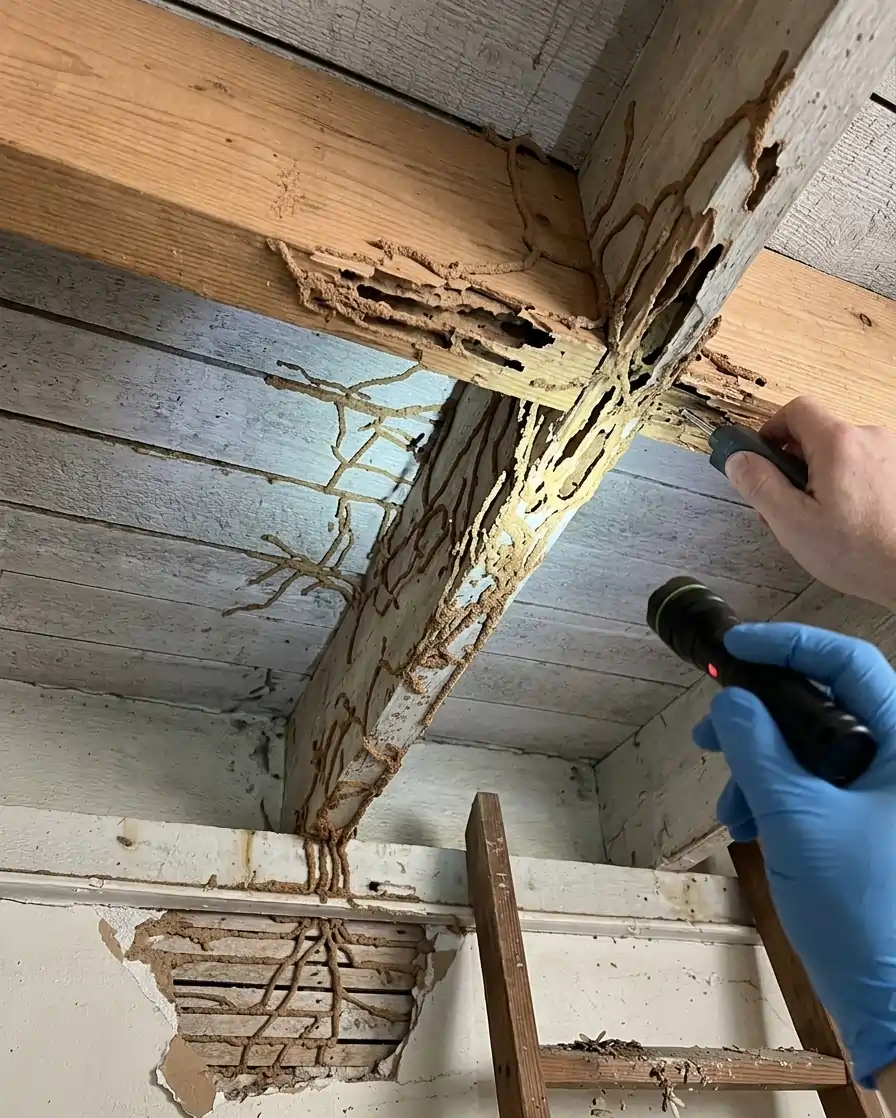
Termite Control Across Fair Oaks and the Surrounding Sacramento Region
We serve Fair Oaks-95628 and 20 cities throughout the Sacramento Valley. Every location receives the same licensed inspection standards and species-matched treatments.
Sacramento · Elk Grove · Roseville · Folsom · Citrus Heights · Rancho Cordova · Carmichael · Rocklin · Davis · West Sacramento · Natomas · Galt · Woodland · Lincoln · Antelope · Orangevale · Auburn · Florin · Arden-Arcade · North Highlands