Are These Small Brown Winged Bugs in My House Actually Termites?
Not every small brown insect with wings crawling across your windowsill is a termite. Powderpost beetles, bark lice, and winged aphids get mistaken for termite swarmers every week, and the wrong guess either causes needless panic or lets a real colony go unchecked. Here is how to tell the difference in under a minute.
Most Small Brown Winged Bugs Found in Galt, Woodland, Lincoln, and Antelope Homes Are Not Termites
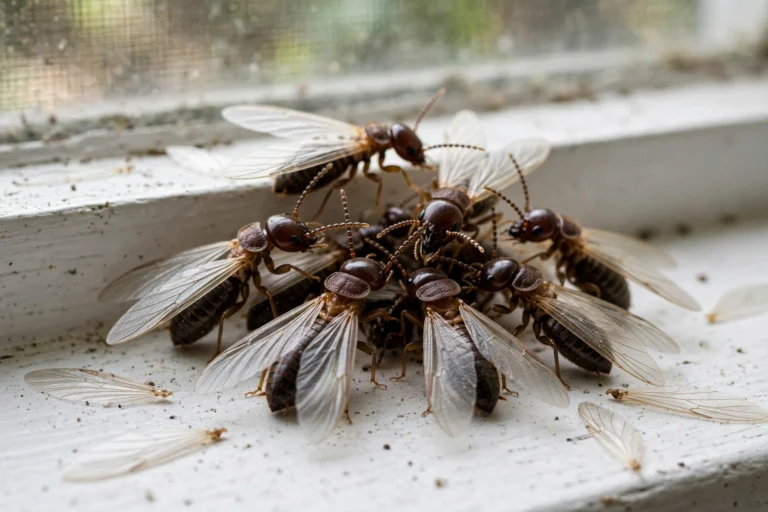
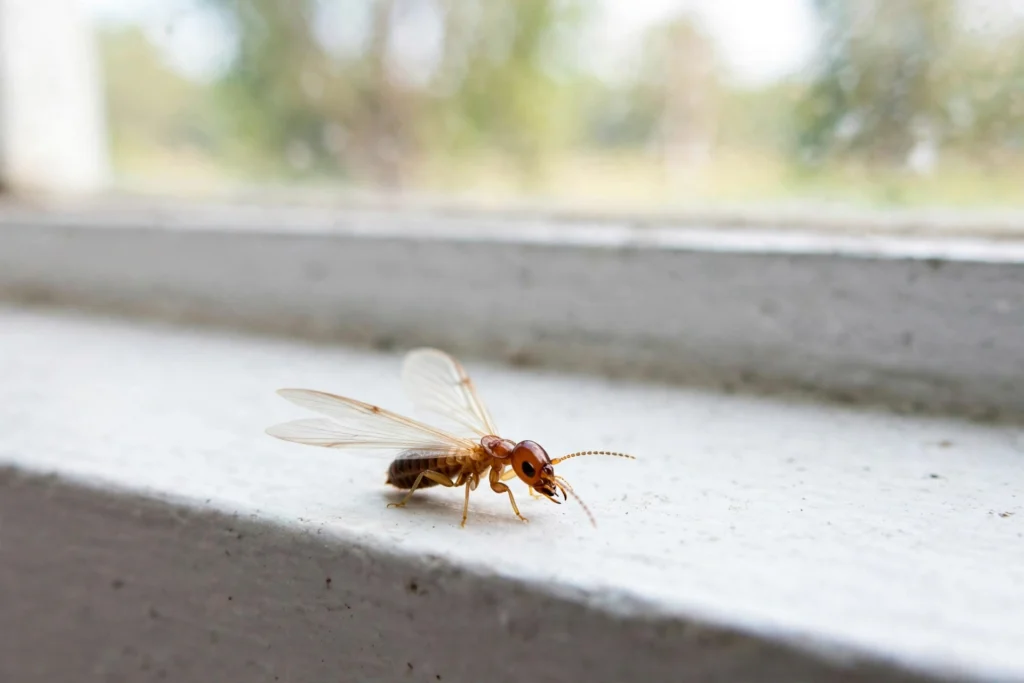
A real termite swarmer has four wings of equal length that are roughly twice its body length, straight bead-like antennae, and a thick waist with no pinch between the thorax and abdomen. If the wings are uneven in size, the antennae are bent like an elbow, or the body has an hourglass shape, you are most likely looking at something else.
The most common termite look-alike we get called out for in older Galt and Woodland homes is the powderpost beetle. It is reddish-brown, hard-shelled, and holds its wings flat over its back like a tiny shell rather than flaring them outward. Powderpost beetles do feed on wood, but only as larvae, and they leave round pinholes with fine powder rather than the mud tubes or hollow-sounding wood termites leave behind.
In Lincoln and Antelope homes near landscaping or irrigated lawns, we also see winged aphids and bark lice (psocids) mistaken for termites. Both are soft-bodied, much smaller than a termite swarmer, and cluster on siding or window screens where moisture collects. Neither one damages wood, and neither means you have a colony inside the structure.
If you are still not sure which one you are looking at, the safest move is a free termite inspection rather than guessing from a photo. Misidentifying a beetle as a termite wastes money on unnecessary treatment; misidentifying a termite as a beetle lets real damage continue.
Not sure what you found? Send us a photo or schedule a free termite inspection and we will identify it on the spot, no guesswork and no obligation.
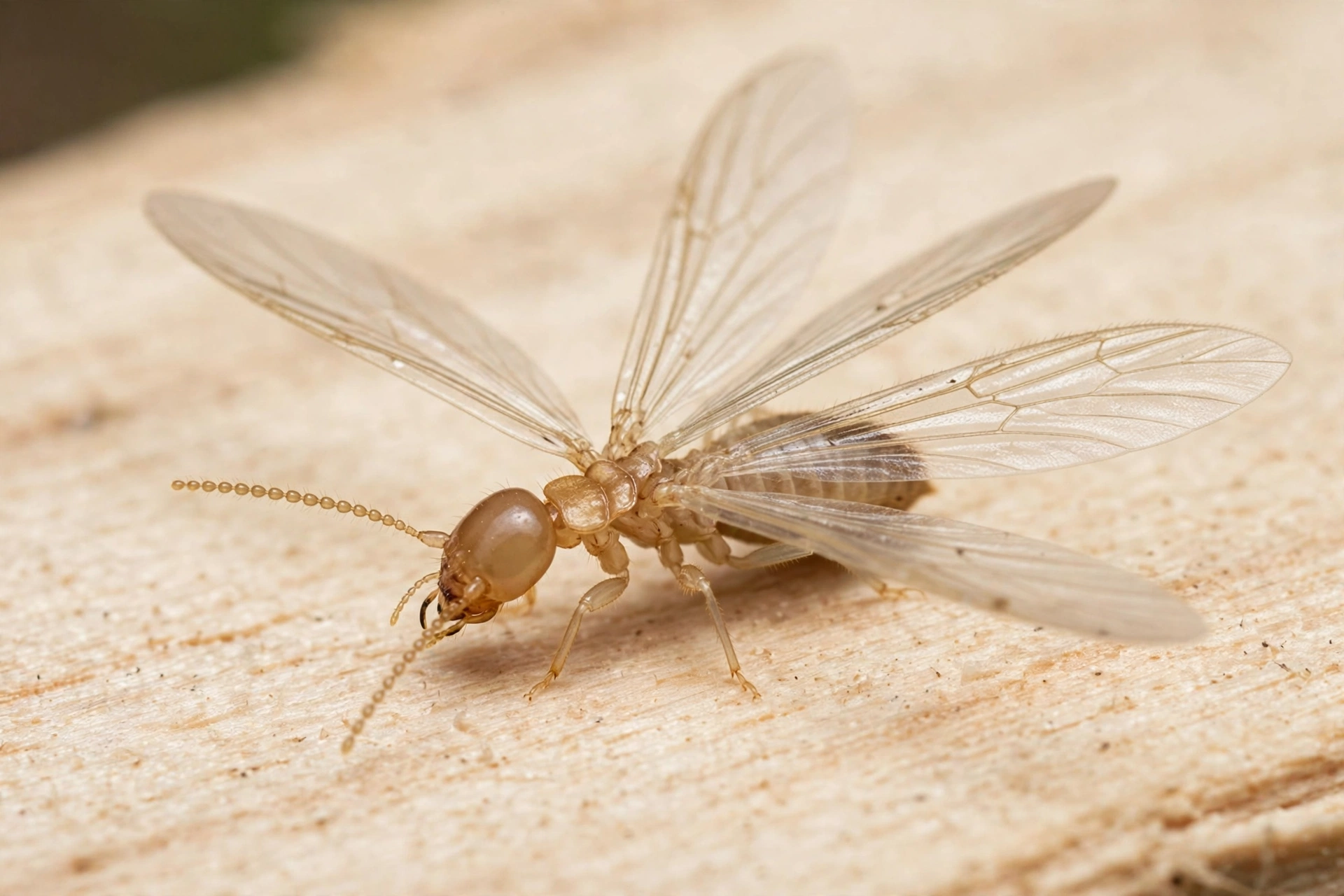
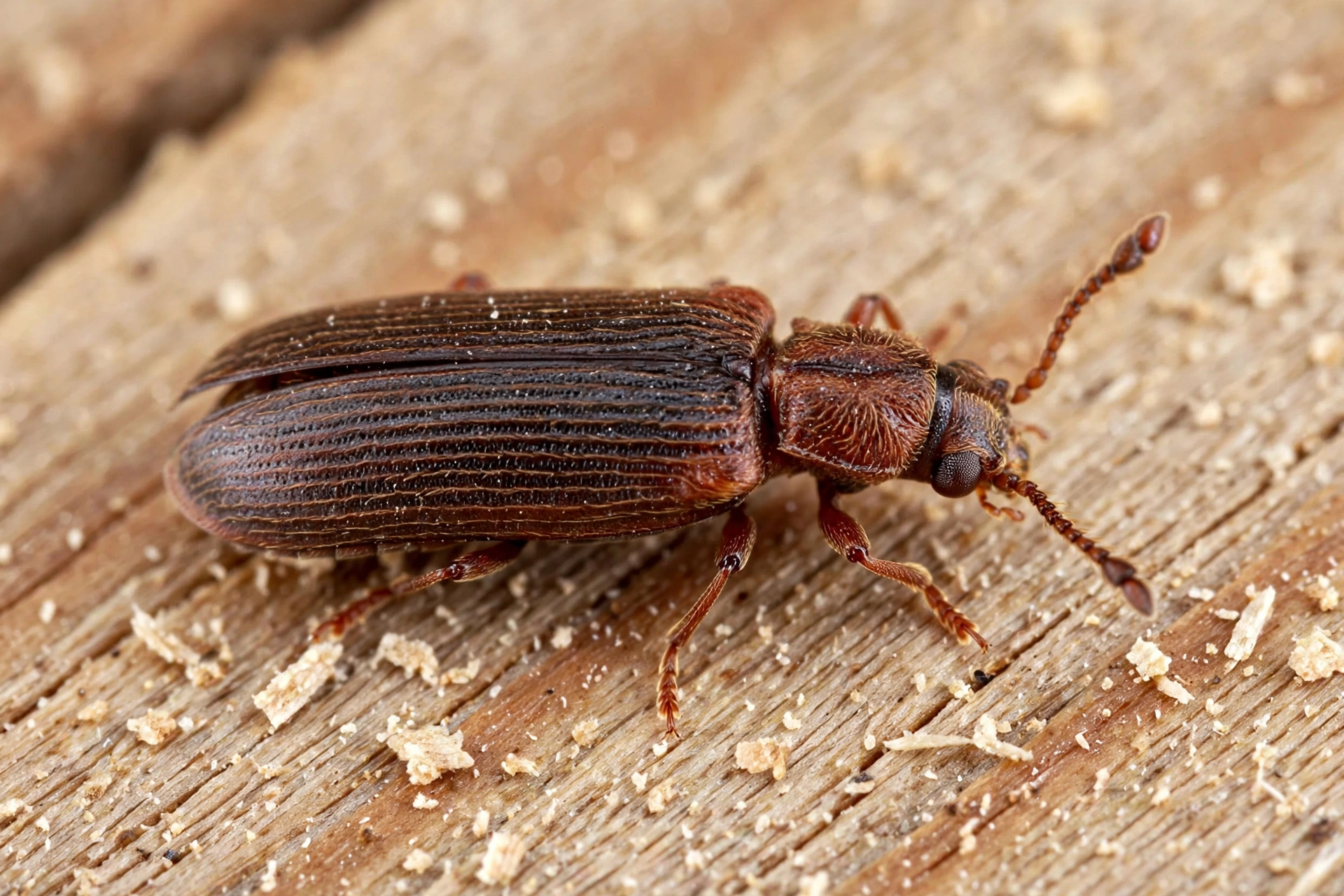
Drag the divider, or tap anywhere on the photo, to compare a wood-boring beetle and a termite swarmer.
How We Confirm It’s Actually Termites Before Recommending Any Treatment
We start by asking for a photo or a physical sample whenever possible, since wing shape and antenna structure are visible even in a blurry phone photo. If the insect matches a termite swarmer, the next step is a full inspection of the area it came from: baseboards, window frames, sill plates, and any wood-to-soil contact points, checking for mud tubes, frass, or hollow-sounding wood.
At Sacto Termite Control, because drywood and subterranean termite treatments are completely different, we confirm which species is present before recommending anything. Subterranean swarmers point toward a liquid barrier or bait system; drywood swarmers point toward localized spot treatment or, for widespread activity, fumigation. Nothing gets recommended off a single bug on a windowsill.
Frequent Questions About Small Brown Winged Bugs
Real questions homeowners ask before they know what they are dealing with.
Yes. Piles of shed, equal-length wings near windows, doors, or light fixtures are one of the clearest early signs of termites. Swarmers shed their wings after mating, so a pile of wings with no bugs in sight usually means a mature colony is close by. If the wings are all the same length, treat it as a termite sign and get a free inspection rather than waiting for visible damage.
Not necessarily, but it is worth checking further either way. A stray swarmer or two can wander in from outside without meaning there is a colony inside your home. Finding several in the same indoor spot, especially near a window or baseboard, is the stronger signal that points to an inspection rather than a single bug you swatted.
This is very often a bark louse (psocid), a soft, tiny insect that clusters where moisture and mold collect, such as window screens and siding. Psocids do not damage wood and do not indicate a termite problem. They are harmless and usually clear up once the moisture source is addressed.
You do not need to pay just for an ID. We offer a free termite inspection for homeowners and property managers across the Sacramento area, including multi-unit and commercial properties, so identifying a single bug never has to come out of pocket before you know whether it is even necessary.
Often, yes. Swarmers found indoors usually emerged from a colony inside or directly under the home, while swarmers seen outdoors may come from a colony in a nearby yard. Either way, indoor swarmers call for an inspection to trace where they came from.
No. Spraying or vacuuming the swarmers you see only removes the reproductive termites. The workers and the colony behind them stay hidden in the wood or soil, so new swarmers will appear again. Only an inspection and treatment of the colony itself solves the problem.