Subterranean Termite Control in Sacramento
Sacto Termite Control Company handles Sacramento’s most common and most damaging termite species. Subterranean termites live in colonies underground and travel through soil to reach the wood in your home. They are active year-round in Sacramento’s climate and can enter through any foundation crack wider than 1/32 of an inch. Most homeowners never see them, just the damage they leave behind, or the mud tubes they build to travel above ground. A professional termite inspection confirms the species and the entry points before any treatment begins.
How Subterranean Termites Enter and Damage Sacramento Homes
Subterranean termites come from the soil around your home. They are not invaders from outside the region, they are already in the ground beneath your property. Every Sacramento home sits on or near soil that contains active termite colonies.
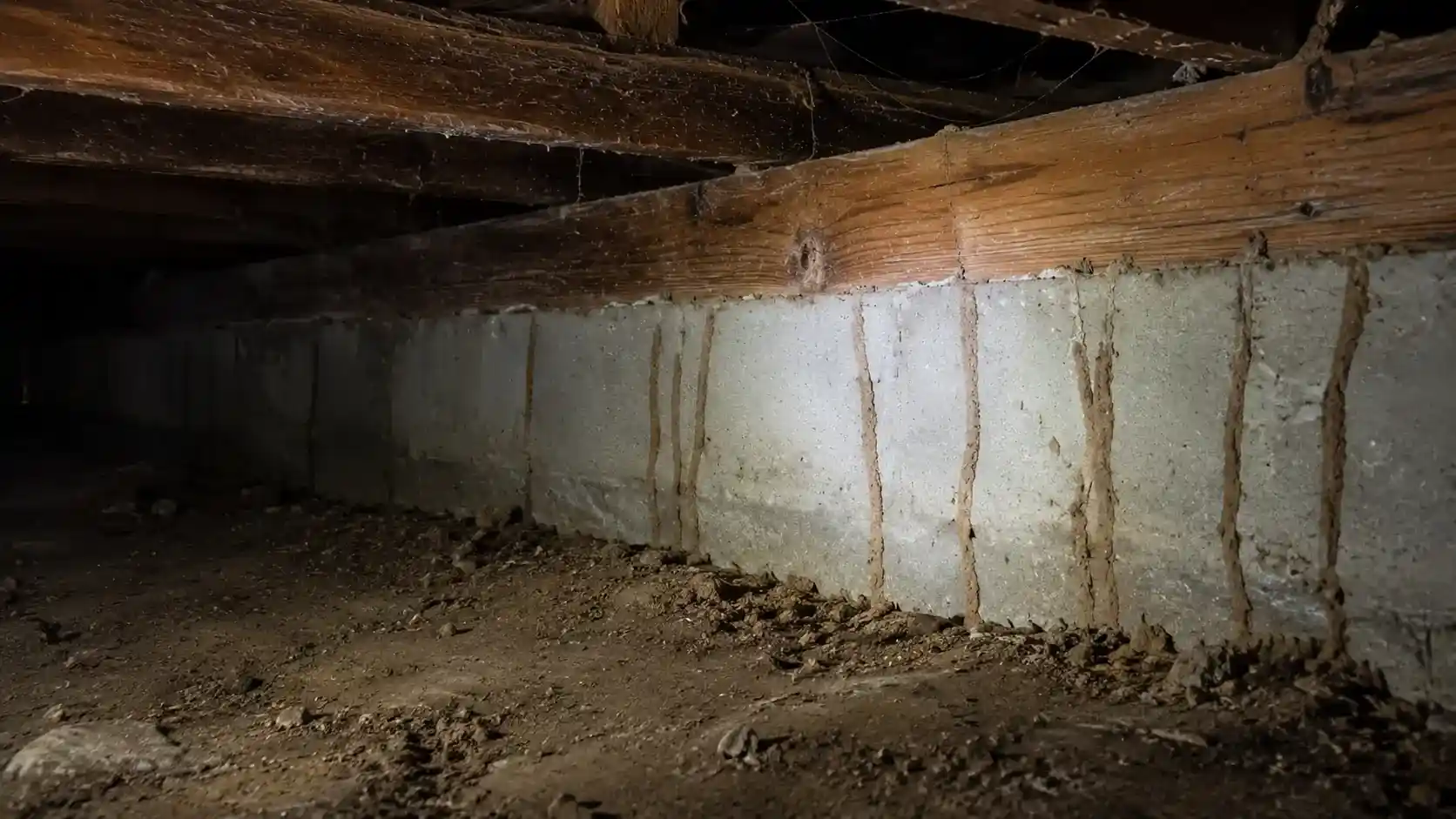
They reach your wood through three main pathways. The first is direct wood-to-soil contact, like a sill plate resting on a foundation or mulch piled against wood siding. The second is mud tubes, that pencil-thin tunnels of soil and saliva they build up foundation walls, concrete piers, or crawl space framing to travel between the ground and the wood above. The third is slab cracks. Homes built on a concrete slab are especially vulnerable because termites move through any crack wider than 1/32 of an inch, completely hidden under the floor. Most Sacramento homes built after 1960 are slab-on-grade, which means the termite entry point is under your floor, not visible from any accessible area.
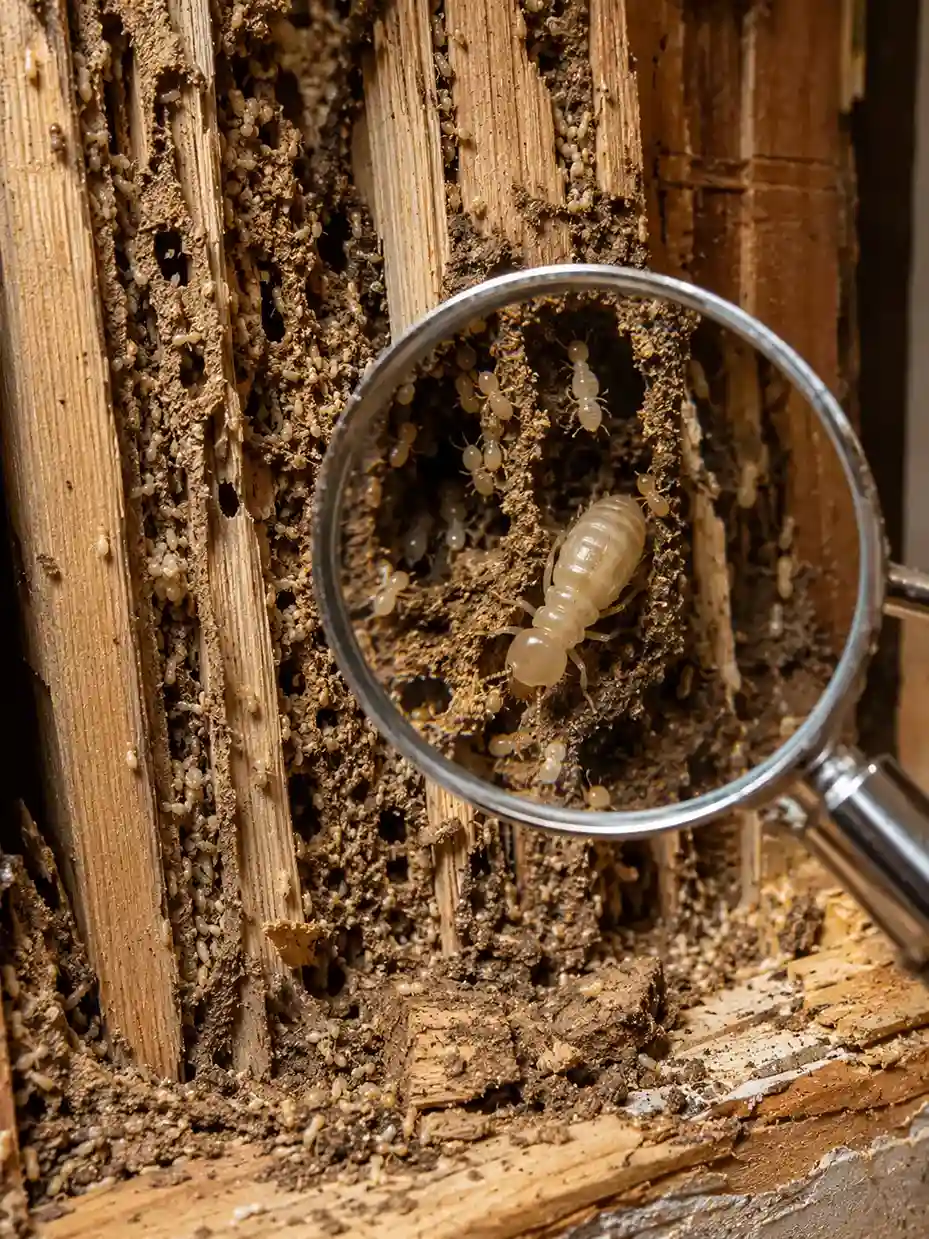
Once inside, subterranean termites eat wood from the inside out, hollowing structural members while leaving the surface intact. Floor joists, wall studs, sill plates, and support beams all lose strength silently. In most cases, the infestation has been active for 12 to 24 months before a homeowner notices any visible sign. The earlier we find them during a routine termite inspection, the less structural wood has been consumed.
If subterranean termites have already caused structural damage, termite damage repair restores affected wood after the colony has been eliminated. In rare cases where Formosan subterranean termites are identified, that are an aggressive variant with much larger colonies, a more intensive treatment plan is required. Read more on Formosan termite control.
Liquid Barrier vs. Bait Stations: Choosing the Right Control Method
Two proven methods exist for subterranean termite control. Each one works differently and suits different situations. Understanding both helps you make the right decision for your home.
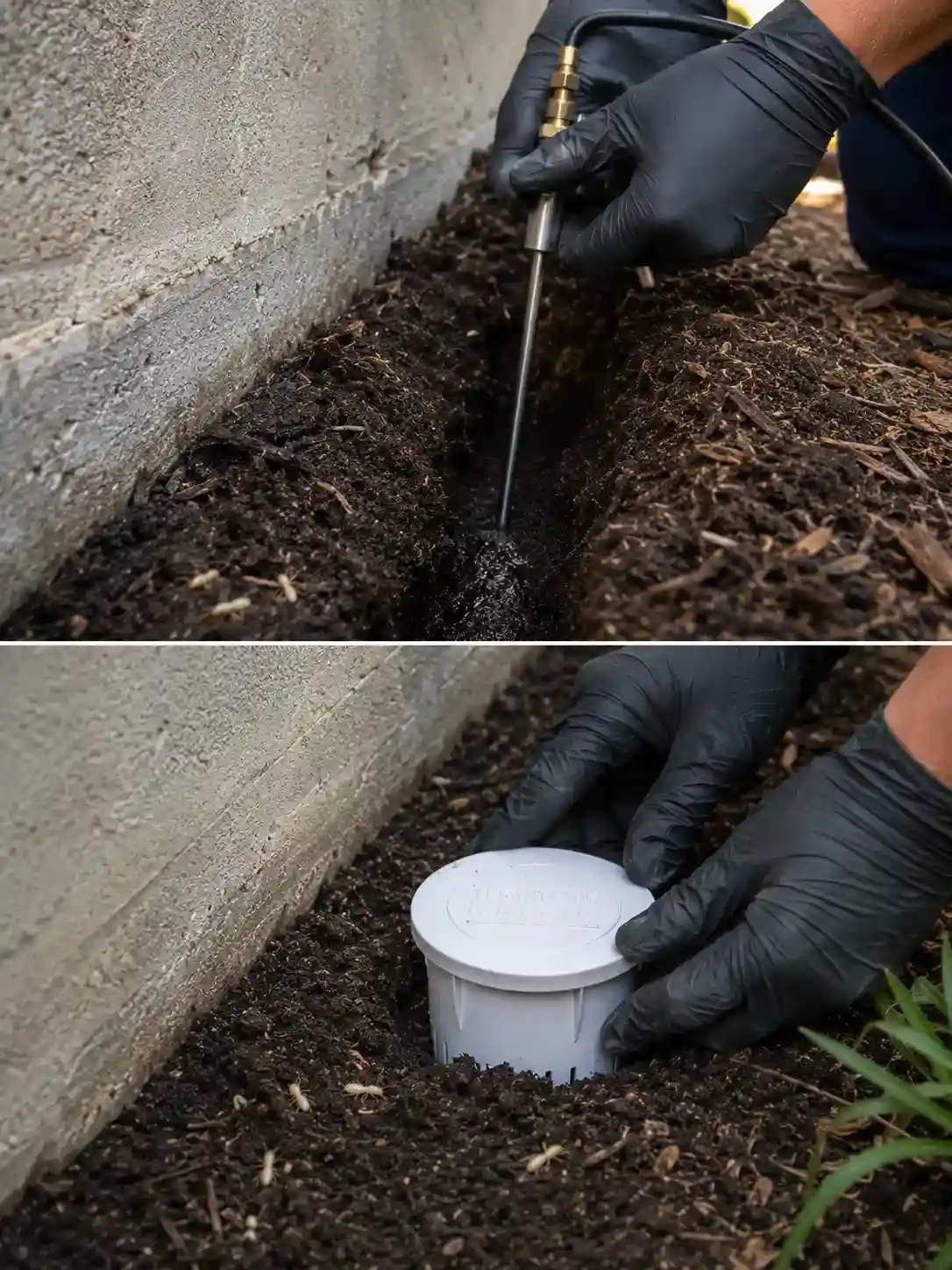
Liquid barrier treatment creates a continuous chemical zone in the soil around and under your foundation. We trench the perimeter, inject a non-repellent termiticide (fipronil-based products like Termidor are the industry standard), and refill the trench. Termites walking through the treated soil carry the termiticide back to the colony on their bodies, spreading it to workers, soldiers, and eventually the queen through normal contact. The entire colony collapses within 90 days. For slab foundations, we also drill through the concrete at regular intervals to inject the barrier beneath the slab, then seal the drill holes. This is the faster-acting of the two methods and is best when you want results quickly or when the infestation is severe.
Bait station systems are placed in the soil around the perimeter of your home, spaced every 10 to 15 feet. Foraging termites find the bait, consume it, and carry it back to the colony as a food source. The active ingredient is slow-acting, slow enough for termites to distribute it widely before dying. Colonies are typically eliminated over a period of weeks to months. Bait stations are the preferred option when liquid application is complicated by nearby wells, drainage systems, or sub-slab features that block uniform coverage. A UC California study found that bait stations installed in winter intercept foraging termites approximately 100 days sooner than those installed in summer, when termite foraging patterns shift. This makes winter or early spring an ideal time to install bait systems in Sacramento.
For homes with crawl spaces, liquid injection is straightforward. In this case the soil beneath the structure is accessible and the perimeter trench reaches all entry points. For slab foundations, both methods work, but the approach differs. We assess your foundation type and the severity of activity before recommending one or both.
Commercial properties including warehouses, office buildings, and multi-unit housing follow the same principles but at a larger scale. We coordinate access with property managers and schedule treatment to minimize business disruption.
What Sacramento Homeowners Say About Our Subterranean Termite Control
Verified feedback from residential and commercial clients across our service area.
We had mud tubes running up our garage foundation wall and called for an inspection the same day. The inspector confirmed subterranean activity, applied a Termidor liquid barrier around the full perimeter the following morning, and monitored the entry points. The mud tubes dried out within a week and the 90-day follow-up showed no active termites anywhere along the foundation.
Inspector recommended bait stations for our Natomas property because the concrete slab made liquid injection more complex and the infestation was early-stage. The stations were installed along the perimeter and around the landscaping beds in one visit. At the 60-day check, three stations showed activity and were loaded with fresh bait. Colony eliminated by the 120-day inspection.
After Treatment: Monitoring, Prevention, and Long-Term Protection
Subterranean termite control does not end on treatment day. The liquid barrier remains active in Sacramento's soil for five or more years under normal conditions. Bait stations require regular monitoring, so we visit every 3 to 6 months to check for activity and replace consumed bait. Both methods need follow-up inspections to confirm the colony has been eliminated and that no new colonies have entered from untreated areas.
Prevention goes hand in hand with treatment. After eliminating an active colony, we identify and document conditions that created the original risk. Wood-to-soil contact anywhere on the property needs to be corrected. Mulch against the foundation wall should be pulled back by at least 6 inches. Gutters and drainage should direct water away from the foundation, not toward it. Crawl space ventilation should be adequate to prevent moisture buildup. These are not decorative suggestions, each one directly reduces the probability of a new infestation.
For ongoing coverage, a termite bond provides annual inspections, preventive treatment refreshes, and a guarantee that any new subterranean termite infestation will be retreated at no additional cost. Most Sacramento homeowners who have dealt with subterranean termites choose a bond rather than waiting to see if the problem returns.
Frequent Questions About Subterranean Termite Treatment in Sacramento
Straight answers to what Sacramento homeowners ask most before calling us.
Yes, when properly installed and monitored. University of Kentucky entomology research confirms that non-repellent liquid termiticides and bait systems are both proven to eliminate subterranean termite colonies. The key difference is time. Liquid barriers work faster. Colonies typically collapse within 90 days. Bait systems take longer because termites must first find the stations and distribute the bait. Bait stations also require regular professional monitoring to remain effective. For severe or fast-moving infestations, liquid barriers are preferred. For homes where liquid application is complicated by the foundation type or water features nearby, bait systems are often the better fit.
Yes, and this is one of the most common questions we get. Slab-on-grade foundations hide the most common termite entry points under your floor. Liquid barrier treatment on a slab requires drilling through the concrete at regular intervals along the perimeter and at interior points like garage slabs and porch slabs, then injecting termiticide beneath to reach the soil. The drill holes are sealed after injection. The process is more involved than a crawl space treatment, but the result is the same: a complete barrier under and around the structure. We assess your slab type and any existing cracks before treatment to ensure complete coverage.
Yes. Subterranean termites do not distinguish between residential and commercial structures. Warehouses and office buildings with wood framing, wood pallet storage, or wood interior finishes are at equal risk. Large commercial properties can be harder to inspect thoroughly because of equipment, shelving, and limited crawl space access. We provide commercial subterranean termite control throughout Sacramento with treatment reports that satisfy property management documentation requirements. Quarterly or annual monitoring contracts are available for commercial accounts.
Slowly at first, then faster. A new subterranean colony takes 3 to 5 years to grow large enough to cause significant structural damage. But once a colony is established and large, daily wood consumption accelerates. Most homeowners discover an infestation after 12 to 24 months of active feeding, by which point a trained inspector can usually find hollowed joists or sill plates. Leaving a confirmed infestation untreated for another year typically increases repair costs significantly. Treatment now is always cheaper than treatment later.
We Control Subterranean Termites Throughout Sacramento and the Region
Our subterranean termite control services cover following areas around Greater Sacramento.
Sacramento · Elk Grove · Roseville · Folsom · Citrus Heights · Rancho Cordova · Carmichael · Fair Oaks · Rocklin · Davis · West Sacramento · Natomas · Galt · Woodland · Lincoln · Antelope · Orangevale and Auburn
Schedule an Urgent Inspection
Call (916) 269-0582 or email hello@sactotermitecontrol.com. Liquid barrier and bait station estimates are zero-cost after inspection. Treatment can typically begin within the same week.
- Licensed by the California Structural Pest Control Board
- Non-repellent termiticides used as standard
- Slab and crawl space treatment expertise
- Residential and commercial properties served
- Written treatment documentation on every job