
· Rosemont, CA · Sacramento County East
Kill The Termites in Rosemont, CA
Before The Damage Runs Deeper.
Rosemont is an unincorporated community in Sacramento County, in east Sacramento, where mostly 1960s to 1980s suburban homes sit on valley clay and loam soils. Main roads Kiefer Blvd, Bradshaw Rd, Watt Ave, and Folsom Blvd run through the community, Highway 50 runs along its north edge, and the American River lies just north. Those soils, the age of the housing stock, and daily irrigation along foundations create steady termite pressure in Rosemont, in ZIPs 95826 and 95827. Our licensed technicians have served Rosemont since 2010 with free same-day inspections and a written warranty on every treatment.
Open Today
15+
Years of Treating Termites
4.9★
Google Rating
24/7
Emergency Service
Licensed Termite Control in Rosemont for Every Species, Property Age, and Soil Zone
Rosemont occupies a distinct position in the Sacramento Valley. As an unincorporated community in Sacramento County in east Sacramento, it is built mostly of 1960s to 1980s suburban homes on valley clay and loam soils, with Highway 50 along its north edge and the American River just north. Clay and loam hold moisture around slab foundations, while the community’s uniform housing age means many homes share the same construction details and the same expired protection at the same time.
Every Rosemont engagement begins with a professional termite inspection using acoustic emission devices and thermal imaging to identify the species present, locate active colonies, and confirm the extent of damage before any treatment decision is made. Subterranean termites in Rosemont’s clay and loam soils are addressed through liquid barrier applications around the full perimeter, with focused attention at penetration points, combined with bait stations where foraging is widespread.
For confirmed Formosan subterranean termite cases, a multi-method approach combining liquid barriers and bait stations with extended monitoring is applied. Drywood termites colonizing aging roof framing are resolved through targeted spot injection for isolated attic colonies or whole-structure fumigation depending on how far the infestation has spread. Where termites have caused structural or cosmetic damage, we coordinate licensed contractor repairs after treatment is confirmed complete.
Why Rosemont Properties Face Termite Pressure From Its 1960s to 1980s Construction
Rosemont’s uniform 1960s to 1980s build-out creates four problem patterns our technicians encounter most consistently across Rosemont properties, from Kiefer Blvd to Bradshaw Rd and Watt Ave.
1970s Slabs With Plumbing Penetrations Termites Exploit
WHY IT HAPPENS HERE
Slab-on-grade 1970s construction runs plumbing directly through the concrete, and fifty years of ground movement and settling have opened small gaps around those penetrations. Subterranean termites in Rosemont’s valley clay and loam soils follow those gaps straight to wood, often entering at bathrooms, kitchens, and laundry walls before any sign appears outside.
OUR APPROACH
Inspection prioritizes penetration points: bathrooms, kitchens, and laundry walls get acoustic and thermal checks, and barrier work is focused at those entry points as well as the full perimeter, so a slab gap does not become a permanent route indoors.
Original Soil Treatments Expired Decades Ago
WHY IT HAPPENS HERE
Whatever pre-construction termiticide went under Rosemont slabs in the 1960s to 1980s degraded to ineffective concentrations decades ago. Homes across Rosemont, in ZIPs 95826 and 95827, therefore have no reliable chemical barrier left at the foundation line, even where the original treatment was correctly applied.
OUR APPROACH
We re-establish the protective barrier these homes have lacked for decades: full-perimeter liquid barrier applications calibrated for Rosemont’s clay and loam soils, with bait stations where foraging pressure is widespread, and a written warranty on the work.
Tract Layouts With Irrigation Against Every Foundation
WHY IT HAPPENS HERE
Rosemont’s tract landscaping runs lawn and planter beds tight against foundations on nearly every lot, and daily irrigation keeps that clay and loam soil damp. Damp soil against a slab is ideal foraging ground for subterranean termites, and it also hides mud tubes behind plantings.
OUR APPROACH
Beyond the barrier itself, we map every irrigation head relative to the foundation and recommend specific adjustments, such as moving heads back from the slab and keeping downspouts discharging away from the house, so treatment is not undone by constant moisture.
Aging Roof Framing Vulnerable to Drywood Colonization
WHY IT HAPPENS HERE
Fifty-year-old roof framing, original eaves, and weathered fascia across Rosemont give drywood termites dry, seasoned wood to colonize, often in attics that are rarely inspected. Warm summer conditions help drywood swarmers settle in roof vents, ridge caps, and attic access gaps.
OUR APPROACH
Attic inspection is standard on every Rosemont assessment, with acoustic emission sweeps across rafters and framing. Early-stage attic colonies are treated with targeted spot injection; widespread colonies are treated by whole-structure fumigation with clearance testing before re-entry.
Rosemont Termite Activity Across Every Season
Rosemont follows the classic Sacramento Valley termite calendar, driven by soil moisture and temperature across its clay and loam soils, its irrigated tract lots, and its aging roof framing.
Spring (March – May)
Subterranean swarming peaks as soils warm. In Rosemont’s tract neighborhoods, swarmers often emerge indoors near plumbing walls and windows, where slab penetrations give colonies a direct route from damp clay and loam soil into the house.
TIP: Finding wings indoors in spring is a strong signal of an established interior colony, not a new invasion from outside. Book an inspection promptly so the colony can be located before summer foraging spreads it further.
Summer (June – September)
Daily irrigation keeps foundation perimeters damp and colonies forage at maximum range. Drywood swarming also peaks in summer, with swarmers settling in Rosemont’s aging roof framing, eaves, and fascia.
TIP: Pull irrigation back from the foundation and check that downspouts discharge away from the slab. Summer is also the time to check attic framing and window frames for drywood pellets and discarded wings.
Fall (October – November)
First rains trigger renewed subterranean foraging as clay and loam soils rehydrate. Fall is the best window for barrier installation in Rosemont, because partially rehydrated soil distributes termiticide evenly around slab foundations.
TIP: A fall barrier application protects through the entire next swarm season. Homes treated in fall enter spring with an active barrier already in place at slab penetrations and the full perimeter.
Winter (December – February)
Colonies remain active in Rosemont’s mild winters whenever temperatures exceed 50 degrees. Saturated clay and loam soils after rain keep subterranean colonies foraging, and mud tubes are often most visible on wet foundation surfaces.
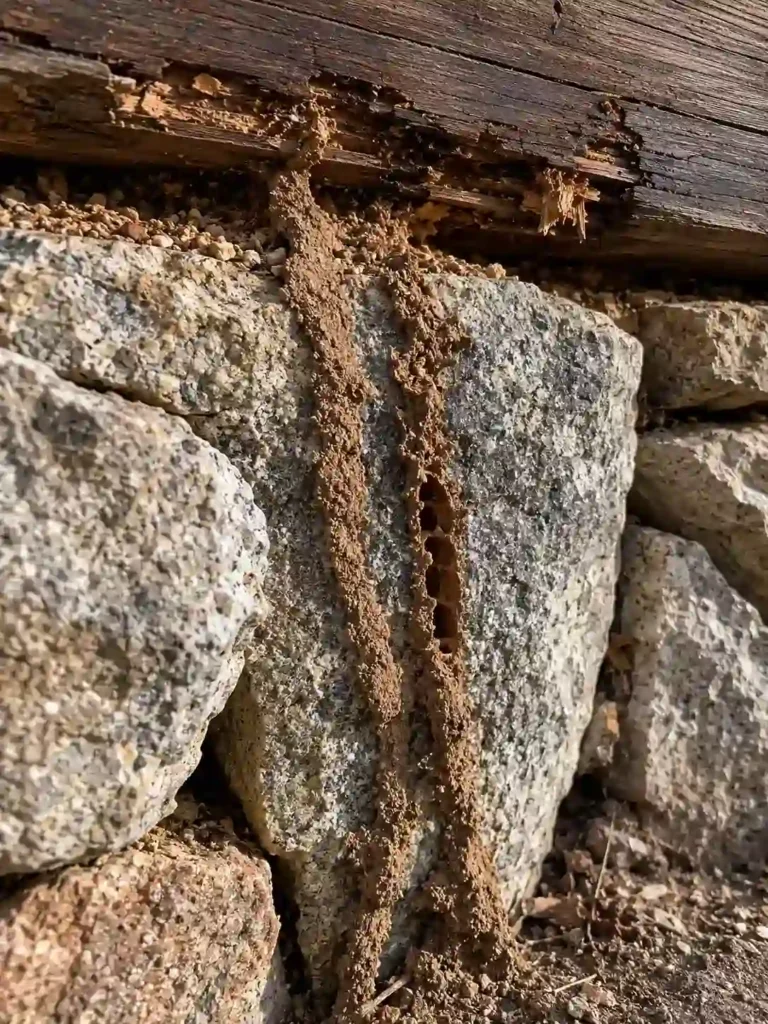
TIP: Use a rainy week to your advantage: walk the foundation perimeter the day after heavy rain when new mud tubes show clearly on damp concrete and stucco, especially near plumbing walls.
Termite Control Services Available in Rosemont
- Termite Inspection Same-day and next-day availability across all Rosemont neighborhoods in ZIPs 95826 and 95827. Acoustic emission detection and thermal imaging confirm species identity and colony location before any treatment recommendation is made.
- Termite Control Species-matched treatment for Rosemont’s 1960s to 1980s tract housing stock, from slab penetrations to aging roof framing, on valley clay and loam soils.
- Subterranean Termite Control Liquid barriers and bait stations calibrated for Rosemont’s valley clay and loam soils. Homes with irrigation tight against the foundation receive focused barrier work at slab penetrations and the full perimeter.
- Drywood Termite Control Spot treatment for isolated attic and wall cavity colonies or whole-structure fumigation for widespread infestations in Rosemont’s aging roof framing.
- Formosan Termite Control Multi-method treatment combining liquid barriers and bait stations for the most destructive subterranean species documented in the Sacramento region, with extended monitoring.
- Tent Fumigation Whole-structure elimination for severe or widespread drywood infestations in Rosemont homes. Complete in 48 hours with full clearance certification before re-entry.
- No-Tent Spot Treatment Targeted termiticide injection for isolated drywood colonies in attic framing, wall cavities, and structural trim. No evacuation required.
- Pre-Construction & Pre Slab Termite Treatment Soil and framing wood treatment for new Rosemont builds, additions, and major remodels, with documentation for financed projects.
- Termite Damage Repair Structural and cosmetic repair coordination after treatment is confirmed complete, including repair of damage at slab penetrations and in aging roof framing.
- WDO Inspection A WDO inspection gives Rosemont buyers and sellers the official Wood Destroying Organism report for closing, with Section 1 items for active infestation or damage and Section 2 items for conditions likely to cause it. Reports are written in the California format lenders expect and cover the whole structure, from foundation to attic.
Termite Control Across Rosemont and the Surrounding Sacramento Region
We serve Rosemont-95826 and 95827 and 21 cities throughout the Sacramento Valley. That is 22 cities in total, including Rosemont. Every location receives the same licensed inspection standards and species-matched treatments.
Sacramento · Elk Grove · Roseville · Folsom · Citrus Heights · Rancho Cordova · Rosemont · Carmichael · Fair Oaks · Rocklin · Davis · West Sacramento · Natomas · Galt · Woodland · Lincoln · Antelope · Orangevale · Auburn · Florin · Arden-Arcade · North Highlands