
· Florin, CA – Zone 1 · Florin Creek
Termite Control in Florin, CA: Stop Them Before They Spread.
Florin grew from strawberry fields and orchards into a Sacramento County community where early-1900s farm buildings still stand beside post-war suburbs along Florin Road. That layered history creates layered termite risk: original wood framing on historic structures, old barns and sheds with decades of soil contact, and rich former farmland soil that holds moisture around foundations. Our licensed technicians have protected Florin homes and properties since 2010. Free same-day inspections, written warranty on every job.
Open Today
15+
Years of Treating Termites
4.9★
Google Rating
24/7
Emergency Service
Licensed Termite Control in Florin Covering Every Species, Soil Zone, and Property Stage
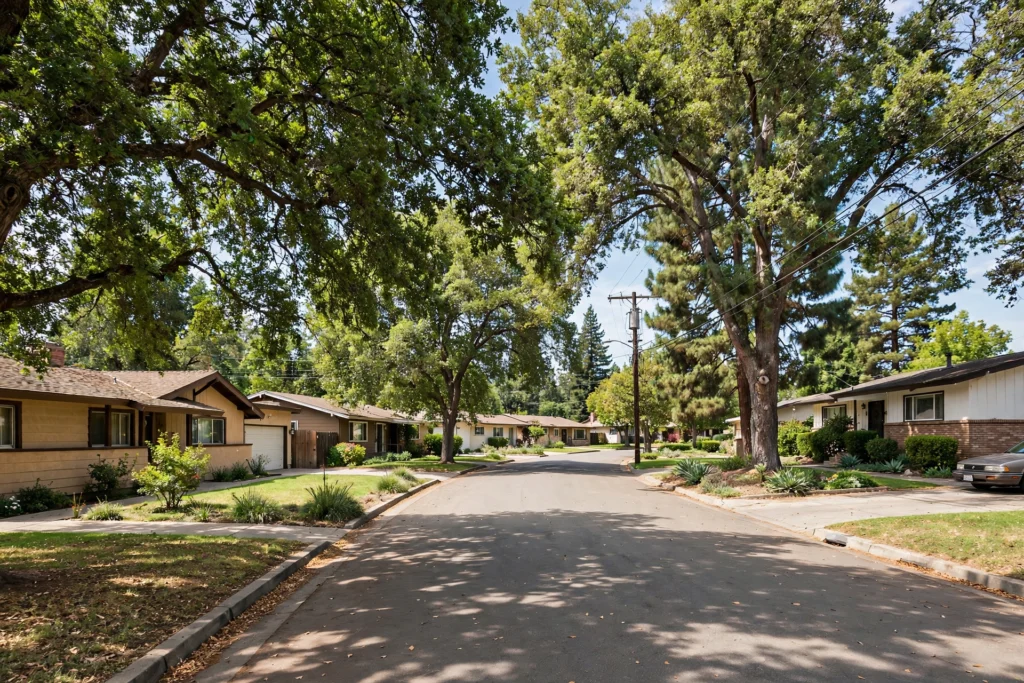
Florin is one of the few Sacramento Valley communities where agricultural heritage and suburban development overlap on the same street. The fertile loam that once grew grapes, peaches, and strawberries retains moisture deep into summer, sustaining subterranean termite colonies around foundations long after the orchards were replaced by homes. Properties near the Historic Florin Townsite add a second risk layer: wood structures dating to the early 20th century with original framing, old outbuildings, and fence lines that have sat in soil contact for generations.
Every Florin engagement begins with a professional termite inspection using acoustic emission devices and thermal imaging to identify the species present, locate active colonies, and assess structural damage before any treatment is recommended. Subterranean termites in Florin’s moisture-retentive loam are addressed through liquid barrier applications calibrated for the area’s soil profile, combined with bait stations where former farmland parcels and large lots warrant extended monitoring. Where drywood termites have colonized older attic framing, we resolve them through targeted spot injection or whole-structure fumigation depending on the infestation’s spread.
Why Florin Faces Termite Pressure From Its Agricultural Past and Its Suburban Present
Florin’s farmland-to-suburb transition created four problem patterns our technicians encounter most consistently across Florin properties.
Historic Wood Structures With a Century of Soil Contact
WHY IT HAPPENS HERE
Many of Florin’s oldest buildings still stand and remain in use, and former farm parcels carry old barns, sheds, and fence lines built when wood went straight into the ground. Decades of soil contact and weather exposure make these structures prime subterranean termite targets, and activity in an outbuilding often precedes activity in the main home.
OUR APPROACH
We inspect every structure on the parcel, not just the house. Moisture meter readings map saturation around old outbuildings, and barrier lines are drawn to protect detached structures that standard residential protocols would miss.
Former Farmland Soil That Holds Moisture Around Foundations
WHY IT HAPPENS HERE
The fertile soil that made Florin a farming hub retains moisture far longer than the sandy soils found elsewhere in the valley. Old irrigation infrastructure and the area’s naturally high water table keep foundation perimeters damp, creating ideal subterranean termite foraging conditions through the dry months.
OUR APPROACH
Barrier applications in Florin are calibrated for moisture-retentive loam rather than applied at a one-size rate. Where soil stays damp year-round, bait stations provide continuous colony monitoring between inspections.
1950s to 1970s Homes With Original Construction Now Past Protection Lifespan
WHY IT HAPPENS HERE
As Florin shifted from fields to neighborhoods, waves of homes went up from the 1950s through the 1970s. Original pre-construction soil treatments on these homes have long since expired, and aging slab edges, old plumbing penetrations, and settled foundations open entry points subterranean termites exploit.
OUR APPROACH
We treat these homes as unprotected until proven otherwise: full perimeter inspection, slab-edge and penetration checks, and barrier refresh with an annual termite bond that includes inspection and retreatment guarantees.
Old Tree Stumps, Wood Debris, and Mature Landscaping Near Foundations
WHY IT HAPPENS HERE
Decades of orchard and yard trees across Florin mean buried stumps, old root systems, and wood debris sit within foraging range of foundations. Decaying wood near a home functions as a termite staging ground, letting colonies build strength before moving to the structure.
OUR APPROACH
During inspection we identify buried wood and stump remnants near the foundation line and recommend removal or treatment of the attractant alongside the structural barrier, so the colony’s food source is eliminated rather than just blocked.
Florin Termite Activity Across Every Season
Florin’s moisture-retentive soil stretches subterranean termite activity across more of the calendar than drier valley areas see.
Spring (March – May)
Warming soil triggers subterranean swarming across Florin, often earlier on former farmland parcels where dark loam absorbs heat. Winged swarmers near windows and light fixtures signal mature colonies, not new arrivals.
TIP: Walk your foundation perimeter in April and look for mud tubes on stem walls, especially on the shaded north and east sides where moisture lingers longest.
Summer (June – September)
Subterranean foraging peaks as colonies expand through Florin’s irrigated soil. Sprinkler systems running daily keep foundation perimeters damp, and termite activity concentrates wherever water meets wood.
TIP: Keep irrigation heads at least 12 inches from the foundation and fix any heads spraying directly onto the structure. Moisture control is termite control.
Fall (October – November)
Cooling temperatures slow swarming while the first rains recharge soil moisture. Fall is the most effective window for liquid barrier applications in Florin’s loam, as partially saturated soil distributes termiticide evenly through the soil column.
TIP: Schedule barrier work before the full wet season. A fall application has months to settle in before spring swarming pressure returns.
Winter (December – February)
Wet-season soil keeps subterranean colonies active around Florin foundations whenever temperatures stay above 50 degrees. Winter inspections catch mud tube construction at its most visible, on rain-dampened concrete and stucco.
TIP: Check crawl space vents and foundation walls within 24 hours after heavy rain. New mud tubes show up clearly on wet surfaces.
Termite Control Services Available in Florin
- Termite Inspection — Same-day and next-day availability across Florin. Acoustic emission detection and thermal imaging determine which species is active before any treatment recommendation is made.
- Termite Treatment — Species-matched treatment for Florin’s mixed agricultural and suburban environment, from historic structures to modern tract homes.
- Subterranean Termite Control — Liquid barriers and bait stations calibrated for Florin’s moisture-retentive former farmland soil.
- Drywood Termite Control — Spot treatment for isolated attic colonies or whole-structure fumigation for widespread infestations in older Florin homes.
- Formosan Termite Control — Multi-method treatment combining liquid barriers and bait stations for the most destructive subterranean species documented in the Sacramento region.
- Tent Fumigation — Whole-structure elimination for severe or widespread drywood infestations. Complete in 48 hours with full clearance certification before re-entry.
- No-Tent Spot Treatment — Targeted termiticide injection for isolated drywood colonies in attic framing, wall cavities, and wood trim. No evacuation required.
- Pre-Construction Termite Treatment — Soil and framing wood treatment for new builds on former farmland parcels, with documentation for FHA and VA financed projects.
- Termite Damage Repair — Structural and cosmetic repair coordination after treatment is confirmed complete, including repairs to historic wood structures.
Termite Control Across Florin and the Surrounding Sacramento Region
We serve Florin-95828 and 19 cities throughout the Sacramento Valley. Every location receives the same licensed inspection standards and species-matched treatments.
Sacramento · Elk Grove · Folsom · Citrus Heights · Rancho Cordova · Carmichael · Fair Oaks · Rocklin · Davis · West Sacramento · Natomas · Galt · Woodland · Lincoln · Antelope · Orangevale · Auburn · Roseville · Arden-Arcade