
· Sacramento, CA – Zone 1 Termite Risk
Termite Control in Sacramento, CA – Stop Them Before They Spread.
Sacramento sits in Termite Infestation Probability Zone 1, the highest termite risk designation in the country. Our licensed specialists have
protected Sacramento homes and businesses since 2010, using
species-matched treatments that eliminate the infestation the first time.
Open Today
15+
Years of Treating Termites
4.9★
Google Rating
24/7
Emergency Service

Licensed Termite Control in Sacramento for Every Species, Property Type, and Treatment Stage
Sacramento’s position in Termite Infestation Probability Zone 1 means termite pressure is not seasonal or occasional. It is constant, species-diverse, and present across every neighborhood and property type in the city. Protecting a Sacramento property requires a complete service capability, not a single treatment method.
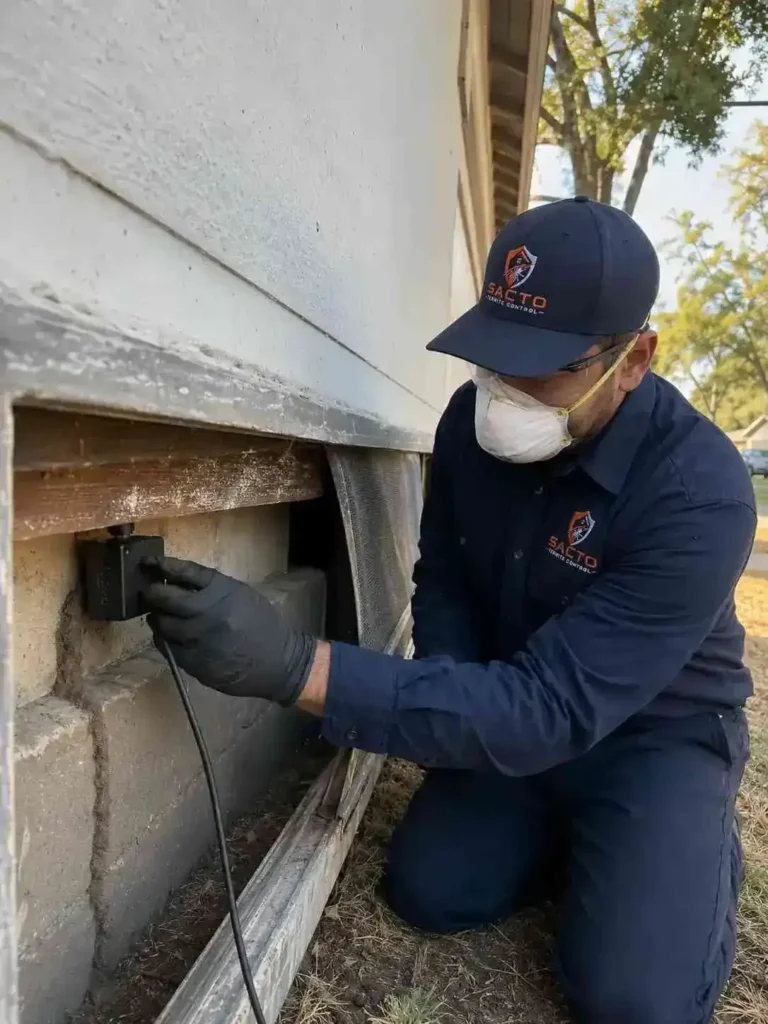
Every engagement begins with a professional termite inspection using acoustic emission devices and thermal imaging to locate active colonies and assess structural damage before any treatment is recommended. Subterranean termites, the most common species in Sacramento’s clay soils, are eliminated through liquid barrier applications trenched and rodded around the full foundation perimeter, combined with bait stations where soil conditions warrant. Drywood termites, which enter Sacramento homes through attic vents and roof gaps during the August-September swarming window, are addressed through targeted spot injection for isolated colonies or whole-structure fumigation for widespread infestations.
For the most destructive cases, including Formosan subterranean termites documented in Sacramento County, multi-method treatment combining liquid barriers, bait stations, and extended monitoring is applied. Properties with active infestations, a history of treatment, or construction dating before 1980 benefit from annual termite bonds that include inspection, barrier refresh, and retreatment guarantees. New construction in Sacramento receives pre-construction soil treatment timed to the foundation stage, with HUD-NPMA-99A and 99B documentation for FHA and VA financed projects. Where termites have already caused structural or cosmetic damage, we coordinate licensed contractor repairs covering everything from sistered floor joists to replacement trim, with building permits handled for all structural work through Sacramento County.
Why Sacramento Properties Face Termite Pressure?
Sacramento’s unique combination of soil type, climate pattern, aging housing stock, and river geography creates termite risk conditions that differ from surrounding cities and persist year-round. These are the four most common problem patterns our technicians encounter across Sacramento properties.
Expansive Clay Soil Creates Direct Pathways to Foundation Wood
WHY IT HAPPENS HERE
Sacramento’s clay shrinks and cracks up to 12 inches deep during dry summers, opening vertical channels that allow subterranean termites to bypass perimeter barriers and reach sill plates without crossing treated soil.
OUR APPROACH
We inject liquid termiticide directly into active foundation cracks before applying the perimeter barrier. Barrier refresh applications are timed for fall when partially saturated clay absorbs termiticide evenly through the soil column.
Pre-1980 Homes with No Chemical Soil Barriers
WHY IT HAPPENS HERE
Midtown, Land Park, East Sacramento, Curtis Park, and Oak Park were built before pre-construction soil treatment was required. Sill plates in these neighborhoods often sit directly on concrete with zero chemical barrier between the soil and the structural wood.
OUR APPROACH
Older Sacramento homes require a full perimeter liquid barrier installation, not a refresh. We trench and rod to the correct depth for the foundation type and confirm treatment volume per linear foot before backfilling.
Swarming Drives Drywood Colonization in Attics
WHY IT HAPPENS HERE
Sacramento’s peak afternoon temperatures in late summer trigger drywood termite swarming through degraded roof vents, soffit gaps, and attic access points. Older homes with original vent screening are particularly exposed during this window.
OUR APPROACH
Attic inspection is standard on every Sacramento assessment. Acoustic emission devices confirm drywood activity in rafters and ceiling joists. Early-stage infestations are resolved with spot injection. Widespread colonies require fumigation.
River Corridor Moisture Sustaining Large Subterranean Colonies
WHY IT HAPPENS HERE
Sacramento’s position between the Sacramento and American Rivers means the water table remains high across much of the city year-round. Neighborhoods near the river levee system, including Pocket, Meadowview, and North Sacramento, sit above permanently moist subsoil that sustains subterranean termite colonies regardless of seasonal rainfall.
OUR APPROACH
River-adjacent Sacramento homes require annual inspection regardless of treatment history. The sustained moisture environment means new colony establishment can occur at any point in the year, not just during the wet season.
Sacramento Termite Activity Across Every Season
Termite activity in Sacramento does not pause between seasons. Each season brings a distinct species behavior, a different entry point, and a different part of your property under pressure.
Spring (March – May)
Sacramento’s clay soils hit the 60-degree threshold that triggers subterranean swarming between mid-March and late April, making this the highest-risk period for new colony establishment at foundations. Winged reproductives from existing colonies emerge indoors near light sources and disperse to found new infestations.
TIP: Schedule your annual inspection before April to stay ahead of the primary swarming window. Mud tube construction caught in early spring, before colonies penetrate structural wood, keeps treatment scope and cost significantly smaller.
Summer (June – September)
Sacramento’s clay soils hit the 60-degree threshold that triggers subterranean swarming between mid-March and late April, making this the highest-risk period for new colony establishment at foundations. Winged reproductives from existing colonies emerge indoors near light sources and disperse to found new infestations.
TIP: Schedule your annual inspection before April to stay ahead of the primary swarming window. Mud tube construction caught in early spring, before colonies penetrate structural wood, keeps treatment scope and cost significantly smaller.
Fall (October – November)
The first significant winter rains reactivate subterranean foraging as Sacramento’s clay absorbs moisture and the water table rises, while partially saturated soil makes this the optimal window for barrier applications.
TIP: Fall liquid barrier applications outperform spring applications in Sacramento because clay absorbs termiticide more evenly when partially saturated. Schedule before December for best results.
Winter (December – February)
Saturated clay during Sacramento’s wet season keeps subterranean colonies active near river corridors throughout winter while drywood colonies inside wall cavities feed year-round regardless of outdoor temperature.
TIP: New mud tube construction is easiest to spot on wet concrete and stucco foundation surfaces immediately after rain clears. Check your foundation after each heavy rain event from December through February.
Termite Control Services Available in Sacramento
- Termite Inspection Same-day and next-day availability across Sacramento. Thermal imaging and acoustic emission devices included on every assessment.
- Termite Treatment Species-matched treatment for every infestation type found in Sacramento. We recommend what the situation requires, not what costs the most.
- Subterranean Termite Control Liquid barriers and bait stations designed for Sacramento’s clay soil conditions. The most common termite problem in the region, handled correctly.
- Drywood Termite Control Spot treatment for isolated colonies or whole-structure fumigation for widespread infestations. We assess and recommend before committing to a method.
- Formosan Termite Control Multi-method treatment for the most destructive termite species documented in Sacramento County. Formosan colonies require a more aggressive protocol than standard subterranean treatment.
- Tent Fumigation Complete whole-structure elimination for severe or widespread drywood termite infestations. Every termite in the structure is eliminated within 48 hours.
- No-Tent Spot Treatment Targeted colony elimination without evacuation or fumigation disruption. The right choice for isolated drywood infestations in accessible wood members.
- Pre-Construction Termite Treatment Soil and wood treatment for new Sacramento builds before construction seals off access. HUD-NPMA-99A and 99B documentation provided for FHA and VA financed projects.
- Termite Damage Repair Structural and cosmetic repair coordination with licensed contractors after treatment is complete. Building permits handled for all structural work in Sacramento.
Termite Control Across Sacramento and Surrounding Cities
We protect homes and businesses throughout Sacramento and 17 surrounding cities in the Sacramento Valley. Each city has its own soil conditions, home age profile, and termite pressure patterns. Our licensed technicians serve every location listed below with the same inspection standards and treatment protocols used in Sacramento.
Elk Grove · Roseville · Folsom · Citrus Heights · Rancho Cordova · Carmichael · Fair Oaks · Rocklin · Davis · West Sacramento · Natomas · Galt · Woodland · Lincoln · Antelope · Orangevale · Auburn