
· Auburn, CA – Zone 1 · Sierra Foothill Granite Country
Termite Control in Auburn, CA. Protect What You’ve Worked For.
Auburn sits in the Sierra foothills along the Placer County border, where decomposed granite soil, historic Gold Rush-era construction in Old Town, and Auburn Ravine’s year-round flow create termite conditions distinct from the Sacramento Valley floor. Our licensed technicians have served Auburn since 2010 with free same-day inspections and a written warranty on every treatment.
Open Today
15+
Years of Treating Termites
4.9★
Google Rating
24/7
Emergency Service

Licensed Termite Control in Auburn for Historic Old Town Properties, Foothill Homes, and Every Termite Species
Auburn is a Sierra foothill community in Placer County, home to one of the best-preserved Gold Rush-era downtowns in California alongside newer hillside subdivisions built into granite terrain. Unlike the flat alluvial clay of the Sacramento Valley floor, Auburn’s termite risk comes from decomposed granite and rocky foothill soil combined with the concentrated wood-frame construction of Old Town buildings dating to the 1850s. This combination of historic construction and foothill terrain creates termite pressure patterns found nowhere else in our service area.
Every Auburn engagement begins with a professional termite inspection using acoustic emission devices and thermal imaging to locate active colonies in both Old Town Auburn’s historic buildings and newer foothill homes before treatment is recommended. Subterranean termites in Auburn’s decomposed granite and foothill soils are addressed through liquid barrier applications calibrated for rocky, sloped terrain where standard flat-lot barrier specifications do not apply directly. Drywood termites entering Auburn’s historic wood-frame downtown buildings and foothill homes through aging trim and roof vents are resolved through targeted spot injection for isolated colonies or whole-structure fumigation when infestation extends across multiple rooms.
For Formosan subterranean termite cases in Auburn’s foothill soil, multi-method treatment combining liquid barriers and bait stations with extended monitoring is applied given the colony populations these conditions can sustain. Auburn homeowners in Old Town’s historic buildings with no treatment history benefit most from annual termite bonds covering inspection, barrier maintenance, and retreatment guarantees at a predictable annual cost. Where termite damage has occurred, we coordinate licensed contractor repairs with Placer County building permits handled for all structural work.
Why Auburn’s Foothill Terrain and Historic Old Town Create Termite Conditions Unique in Our Service Area
Auburn’s position in the Sierra foothills, its decomposed granite soil, and its concentration of Gold Rush-era wood-frame construction combine to create termite risk conditions that differ from every valley-floor city in our service area. These four problem patterns define what our technicians find most consistently across Auburn properties.
Decomposed Granite Foothill Soil Behaves Differently Than Valley Clay
WHY IT HAPPENS HERE
Auburn’s soil is decomposed granite and rocky foothill terrain rather than the alluvial clay found across the Sacramento Valley floor. This soil type drains faster overall but creates concentrated moisture pockets wherever slopes, retaining walls, or landscaping interrupt natural drainage. Subterranean termite colonies in Auburn cluster around these interrupted-drainage zones rather than spreading evenly the way they do in flat clay-soil communities.
OUR APPROACH
We apply liquid barriers in Auburn with barrier trenching adjusted for sloped and terraced lots, since standard flat-lot specifications do not translate directly to hillside terrain. Inspections map each property’s grading and drainage pattern to locate where foothill soil is retaining concentrated moisture.
Old Town Auburn’s Gold Rush-Era Buildings Carry Over 150 Years of Exposure
WHY IT HAPPENS HERE
Old Town Auburn contains commercial and residential buildings dating to the 1850s, among the oldest continuously-occupied wood-frame structures in our service area. Over a century and a half, these buildings have accumulated termite exposure, prior repairs of varying quality, and construction techniques that predate any modern termite protection standard.
OUR APPROACH
Inspections of Old Town Auburn’s historic buildings involve extended acoustic emission and thermal imaging assessment covering original structural wood, later additions, and prior repair work, which is treated as a distinct risk zone from the rest of the structure. Treatment plans account for the age and construction methods specific to buildings from the 1850s through the early 1900s.
Auburn Ravine and Foothill Creeks Sustain Localized Moisture Zones
WHY IT HAPPENS HERE
Auburn Ravine and several smaller foothill creeks run through portions of the Auburn area, maintaining consistent soil moisture along their corridors even as the surrounding decomposed granite terrain drains and dries. Properties near these waterways experience elevated subterranean termite pressure compared to homes on Auburn’s drier, higher-elevation lots.
OUR APPROACH
Properties along Auburn Ravine and other foothill creek corridors receive barrier treatment addressing the creek-facing side of the structure as a priority zone, with inspection intervals scheduled more frequently than higher, drier properties. Bait station placement accounts for the creek as a consistent moisture source separate from seasonal rainfall.
Hillside and Terraced Lots Complicate Standard Barrier Application
WHY IT HAPPENS HERE
Many of Auburn’s newer foothill subdivisions are built on sloped or terraced lots with retaining walls, multi-level foundations, and grading that channels water differently than a flat valley lot. Standard barrier application methods designed for level ground do not account for how water moves across a hillside property, which can leave gaps in protection at grade transitions and retaining wall bases.
OUR APPROACH
Barrier treatment on Auburn’s hillside and terraced properties is mapped to each property’s specific grading, with particular attention to retaining wall bases, multi-level foundation transitions, and any point where runoff concentrates. We document drainage patterns as part of every hillside property inspection.
Auburn Termite Activity Across Every Season
Auburn’s foothill elevation, decomposed granite soil, and Sierra-influenced weather patterns create a termite activity cycle that differs from the Sacramento Valley floor, with a shorter, more concentrated rainy season and drier summers at higher elevation.
Spring (March – May)
Spring rain in the Sierra foothills is typically heavier and lasts later into the season than on the valley floor, saturating Auburn’s decomposed granite soil and creek corridors. This produces the year’s highest subterranean termite swarming activity, concentrated in Old Town Auburn and along creek-adjacent hillside properties.
TIP: Auburn homeowners in Old Town or near Auburn Ravine should schedule spring inspections before April. Foothill spring rainfall often continues later than in the valley below, extending the high-risk swarming window.
Summer (June – September)
Auburn’s higher elevation and foothill terrain dry out faster than the valley floor during summer, but irrigated landscaping around hillside homes and Old Town buildings maintains isolated moisture pockets. Drywood termite swarmers add pressure from late July through September as they seek entry through aging trim and roof vents on Auburn’s older buildings.
TIP: Do not assume reduced termite risk in Auburn during summer just because the foothill terrain looks dry. Old Town’s historic buildings and any irrigated hillside landscaping remain active risk zones. Summer inspections should prioritize these areas.
Fall (October – November)
Cooling temperatures bring the first significant rain to the Sierra foothills earlier than the valley floor typically sees it, reactivating soil moisture around Auburn’s slopes and creek corridors. Colonies that were dormant through the dry summer become active again as foothill soil moisture returns.
TIP: If you notice new termite activity on your Auburn property in fall, the season’s first foothill rains are a likely trigger. Schedule a fall inspection before November 1, especially for hillside and creek-adjacent properties.
Winter (December – February)
Auburn’s foothill elevation brings a wetter winter than the Sacramento Valley floor, with decomposed granite soil absorbing sustained rainfall unevenly across sloped terrain. Auburn Ravine and other foothill creeks run at their highest winter flow, keeping creek-adjacent and low-lying properties consistently saturated through the coldest months.
TIP: Winter risk in Auburn concentrates around drainage points, retaining walls, and creek corridors rather than evenly across the community. Check these specific zones after any sustained rain event.
Termite Control Services Available in Auburn
- Termite Inspection Same-day and next-day availability across Auburn. Acoustic emission detection and thermal imaging assess Old Town’s historic buildings and foothill homes with the thoroughness that a century and a half of exposure requires.
- Termite Treatment Species-matched treatment calibrated for Auburn’s decomposed granite foothill soil. Barrier specifications are adjusted for sloped and terraced lots rather than standard flat-lot application.
- Subterranean Termite Control Liquid barriers and bait stations applied at specifications for Auburn’s foothill terrain and Auburn Ravine corridor moisture. Creek-facing and hillside foundation zones treated as priority areas.
- Drywood Termite Control Spot treatment for isolated colonies or whole-structure fumigation for widespread infestations in Auburn homes and Old Town buildings. Aging trim and roof vents on historic structures assessed as priority entry points.
- Formosan Termite Control Multi-method treatment for the most destructive subterranean species in the Sacramento region. Auburn’s foothill soil moisture pockets are capable of sustaining the large colony populations Formosan termites require to establish and cause rapid structural damage.
- Tent Fumigation Whole-structure elimination for severe drywood infestations across Auburn homes and historic Old Town buildings. Complete in 48 hours with full clearance certification before re-entry.
- No-Tent Spot Treatment Targeted termiticide injection for isolated drywood colonies without evacuation or disruption. Practical for Auburn homeowners with early-stage infestations in accessible attic or trim zones.
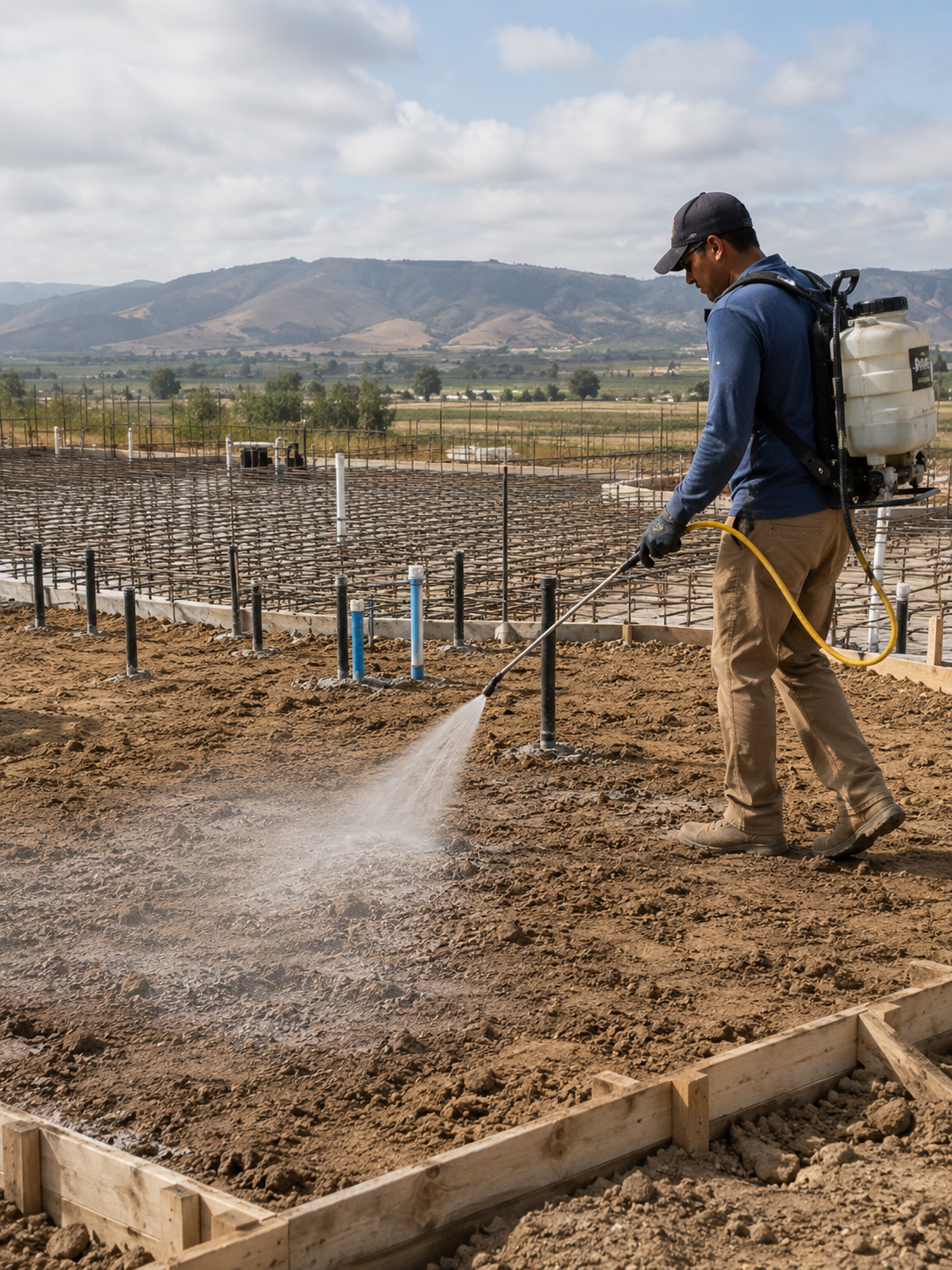
- Pre-Construction Termite Treatment Soil and framing treatment for new hillside construction in Auburn’s foothill subdivisions. Sloped terrain requires adjusted barrier specifications compared to flat-lot standards. HUD-NPMA-99A and 99B documentation for FHA and VA financed projects through Placer County.
- Termite Damage Repair Structural and cosmetic repair coordination after treatment is confirmed complete, including specialized repair for Old Town Auburn’s historic buildings. Placer County permits handled for all structural work.
Termite Control Across Auburn and the Surrounding Sacramento Region
We are professionally serving Auburn and 17 cities throughout the Sacramento Valley. Every location receives the same licensed inspection standards and species-matched treatments.
Sacramento · Elk Grove · Roseville · Folsom · Citrus Heights · Rancho Cordova · Carmichael · Fair Oaks · Rocklin · Davis · West Sacramento · Natomas · Galt · Woodland · Lincoln · Antelope · Orangevale