Termite Swarmers Inside Your House: What It Actually Means
A few flying termites near your porch light on a warm evening is normal termite behavior. Finding a swarm inside your living room, bedroom, or attic is different. It usually means a colony is already living in or right against your home, not just somewhere nearby. If you are seeing swarmers indoors, Licensed Termite Control Company can trace them back to the colony.

Indoor Swarms Point to an Existing Colony in Rocklin, Davis, West Sacramento, and Natomas Homes
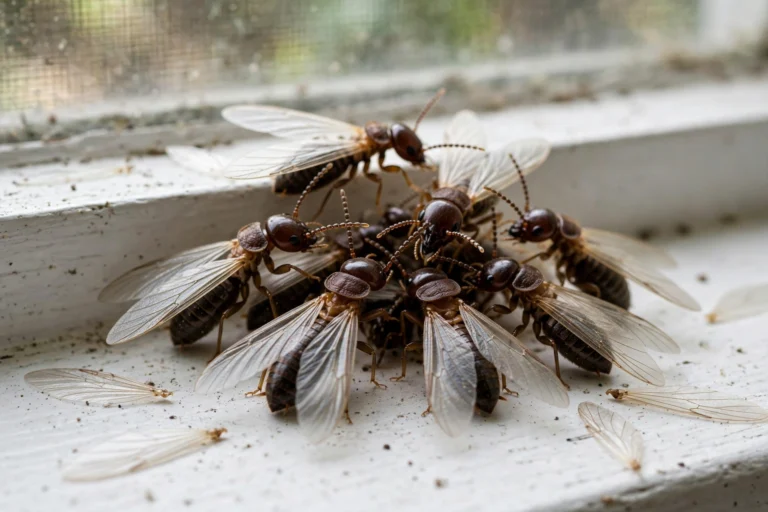
Swarmers are winged termites that leave a mature colony to mate and start new colonies elsewhere. They are drawn to light, which is why they end up circling porch lights outdoors or piling up on windowsills and light fixtures indoors.
The difference between the two locations matters. An outdoor swarm near your yard or soil can come from a colony anywhere nearby, not necessarily your own house. An indoor swarm means those termites were already inside the structure and were looking for a way out, which points to a colony living inside or directly against your home’s wood framing.
Swarmers themselves do not chew wood or cause damage. That work is done by the worker termites that stay behind in the colony. But a colony mature enough to send out swarmers has usually been established for a while, so an indoor sighting is a strong signal, not a false alarm.
We see indoor swarms most often in older homes across Rocklin, Davis, West Sacramento, and Natomas, where slab foundations and mature landscaping create conditions colonies favor. If you found swarmers inside a home in any of these areas, a free termite inspection can trace them back to the colony.
We offer same-day and next-day termite inspections across the Sacramento Valley, and every inspection traces an indoor swarm back to the colony causing it. If nothing is active yet, we can also set you up on an annual termite bond so next swarm season does not catch you off guard.


Drag the divider, or tap anywhere on the photo, to compare severe termite damage and a repaired wall.
How We Treat an Indoor Swarm
We start by asking exactly where the swarmers were found, since that spot is usually the closest exit point to the colony. We check nearby baseboards, window frames, and attic vents for mud tubes, which point to subterranean termites, or for kick-out holes and frass, which point to drywood termites. Both species swarm, so an indoor sighting alone does not tell us which one we are dealing with.
Once we confirm the species and locate the colony, we recommend the right fix. That might mean subterranean termite control for a soil-based colony working up through the foundation, or drywood termite control for a colony living entirely inside the wood itself. Vacuuming up the swarmers only clears the mess. It does not touch the workers and queen still feeding on your home.
Once the colony is treated, we check the wood it was living in for damage, since a colony mature enough to swarm has usually been feeding for a while. Cosmetic repairs like trim, baseboards, and window sills typically run $500 to $3,000 for a standard Sacramento home. Structural repairs to floor joists or sill plates run $2,000 to $8,000, and extensive damage across multiple framing members can run $10,000 to $30,000 or more. Our termite damage repair team documents what is cosmetic and what is structural before any repair work begins.
Frequent Questions About Indoor Termite Swarms
Straight answers to what Sacramento Valley homeowners ask most after finding a swarm.
No. Outdoor swarms can come from a colony anywhere in the neighborhood’s soil, not necessarily your own house. It becomes a sign about your home specifically when the swarmers come from your own foundation, walls, or an indoor sighting.
Note the exact spot and any nearby wood surfaces before you clean up, since that location is usually the closest exit point to the colony. Vacuum up the wings and bodies, then schedule an inspection. Where the swarm happened is the single best clue for finding where the colony lives.
No. Swarmers are a small fraction of the colony sent out to start new colonies elsewhere. Removing them does nothing to the workers and queen still feeding on your home’s wood, and the colony keeps growing until it is treated directly.
Yes. Offices, apartment complexes, and retail spaces in the Sacramento Valley are just as likely to have an indoor swarm once a colony has established itself in the structure. Multi-unit buildings often share wood framing between units, so a swarm in one unit can mean risk for its neighbors too.